
EveryEvent Mexico City

Sfoglia tutti i Events

Find every event in Mexico City

events

Concerts & Live Music
Festivals
Sports & Recreation
Food & Drink
Arts & Culture
Community
Family & Kids
Nightlife
Comedy
Theater
Destinazioni popolari
BaliSedonaLos AngelesCosta RicaNew YorkSan FranciscoAustinMiamiJoshua TreeTulum
Vedi tutte le categorieVedi tutte le destinazioni

Esplora tutte le funzionalità

Strumenti potenti per far crescere i tuoi eventi

Funzionalità della piattaforma

Prezzi dinamici intelligenti
Categorie di biglietti
Posti assegnati
Recupero carrelli abbandonati
Recupero visitatori
Donazioni e prezzi variabili
Sistema affiliati
Scanner biglietti
Codici sconto
Domande personalizzate
Condivisione biglietti
Upsell e componenti aggiuntivi
Analisi e report
Sequenze email
Lista d'attesa / Notifica / Promemoria
Esplora
Discovery HubArtists & PerformersVenuesKnowledge Base
Vedi tutte le funzionalitàChi siamo
PrezziBlog
Saved events
Sfoglia tutti gli eventi

events

Concerts & Live MusicFestivalsSports & RecreationFood & DrinkArts & CultureCommunityFamily & KidsNightlife

Destinazioni popolari

BaliSedonaLos AngelesCosta RicaNew YorkSan Francisco

Esplora

Discovery HubArtists & PerformersVenuesKnowledge Base

Funzionalità della piattaforma

Prezzi dinamici intelligentiCategorie di bigliettiPosti assegnatiRecupero carrelli abbandonatiRecupero visitatoriDonazioni e prezzi variabiliSistema affiliatiScanner bigliettiCodici scontoDomande personalizzateCondivisione bigliettiUpsell e componenti aggiuntiviAnalisi e reportSequenze emailLista d'attesa / Notifica / Promemoria
Vedi tutte le funzionalitàChi siamo
PrezziBlog
AccediRegistratiOrganizzatori di eventi
  • Browse All Events
  • Concerts & Live Music
  • Festivals
  • Sports & Recreation
  • Food & Drink
  • Arts & Culture
  • Community
  • Family & Kids
  • Nightlife
  • Tutte le categorie →
  • All Destinations →
  • For Promoters
  • For Artists
  • For Venues
  • For Festivals
  • For Event Spaces
  • For Nonprofits
  • For Bloggers
  • For Speakers
  • Brand Ambassador
  • Case Studies
  • Rete di 350K+ acquirenti
  • Recupero carrelli abbandonati
  • Prezzi dinamici intelligenti
  • Categorie di biglietti
  • Eventi ricorrenti
  • Posti assegnati
  • Sistema affiliati
  • Lista d'attesa / Notifica
  • Scanner biglietti
  • Widget incorporabile
  • Event Syndication
  • Message Center
  • Integrations
  • Reports
  • Tutte le funzionalità →
  • Chi siamo
  • The Ecosystem
  • Blog
  • Glossario
  • Inspiration
  • Centro assistenza
  • Contatti
  • Documentazione API
  • Risorse del brand
  • Carriere
  • Stampa
  • Termini di servizio
  • Informativa sulla privacy

Events

  • Browse All Events
  • Concerts & Live Music
  • Festivals
  • Sports & Recreation
  • Food & Drink
  • Arts & Culture
  • Community
  • Family & Kids
  • Nightlife
  • Tutte le categorie →

Getaways

  • All Destinations →

For Organizers

  • For Promoters
  • For Artists
  • For Venues
  • For Festivals
  • For Event Spaces
  • For Nonprofits
  • For Bloggers
  • For Speakers
  • Brand Ambassador
  • Case Studies

Funzionalità

  • Rete di 350K+ acquirenti
  • Recupero carrelli abbandonati
  • Prezzi dinamici intelligenti
  • Categorie di biglietti
  • Eventi ricorrenti
  • Posti assegnati
  • Sistema affiliati
  • Lista d'attesa / Notifica
  • Scanner biglietti
  • Widget incorporabile
  • Event Syndication
  • Message Center
  • Integrations
  • Reports
  • Tutte le funzionalità →

Azienda

  • Chi siamo
  • The Ecosystem
  • Blog
  • Glossario
  • Inspiration
  • Centro assistenza
  • Contatti
  • Documentazione API
  • Risorse del brand
  • Carriere
  • Stampa
  • Termini di servizio
  • Informativa sulla privacy
EveryEvent
© 2026 EveryEvent Mexico City. Tutti i diritti riservati.
Inspire

Death Humbles Us All: TheSacred Power of Mortality

Nanak Naam
Nanak Naam
Jan 10, 2025
6 min read
Watch · 5
Nanak Naam explores the sacred and humbling power of death through the lens of Indian funeral traditions. Rather than a place of despair, death functions as a master teacher that strips away all human distinctions—wealth, fame, status—and forces us into absolute humility. Ancient cultures understood death's sacredness and used it as a spiritual tool to recognize that a force greater than ourselves governs existence. This recognition of death's supremacy is not morbid; it is liberating, teaching us how life actually works.

Read · 6 sections

Why Do People Bow at Indian Funerals?

When witnessing an Indian funeral, observers often notice a striking ritual: family members and mourners bow their heads toward the deceased. Western observers might assume this is a sign of respect directed toward the loved one themselves. But there is something deeper happening in that moment. According to Nanak Naam, the bow is not actually directed at the person who has died. Instead, it is a response to encountering the raw, undeniable power of death itself.

When people bow their heads in the presence of death, they are acknowledging something far more profound than individual loss. They are being confronted with a force that transcends personal relationships—a force that has the power to level all human distinctions. In that moment of confrontation with death's reality, there is no adequate response except humility. The bow is an expression of that humility in the face of an overwhelming, universal power.

What Is Death as a Master?

Nanak Naam describes death as "a master that has the strength to overpower all of us." This is not metaphorical language—it is a description of death's actual function in human life. A master, in the traditional sense, is someone who has power over others, who cannot be resisted or negotiated with. Death operates precisely in this way. No amount of wealth, achievement, or social position can buy exemption from death's authority.

The teaching here centers on a crucial recognition: "no matter who you thought you were, whether you are rich or poor, whether you're successful or famous all around the world, there is a master that powers us all." This master does not discriminate. A billionaire and a beggar both face the same inevitable force. A person celebrated across the globe and someone unknown beyond their neighborhood both submit to death's power. This absolute equality before death is what creates the conditions for genuine humility.

The Sacredness of Death in Ancient Wisdom

Rather than treating death as something to be hidden, denied, or feared into silence, ancient cultures—from which Nanak Naam draws—recognized that "there's a sacredness to death." This is not the sacredness of something beautiful or desirable, but the sacredness of something so powerful, so fundamental to existence, that it commands reverence.

In many spiritual traditions, the sacred refers to that which is set apart, that which carries weight and significance beyond ordinary understanding. Death is sacred in this sense because it is the boundary condition of human existence. Everything we do, build, accumulate, and achieve exists within the frame of our mortality. To encounter death—whether at a funeral or in meditation—is to encounter the context in which all of life unfolds. That encounter itself is sacred because it reveals ultimate truth.

Why Humility Before Death Teaches Us How Life Works

The practice of bowing in the presence of death—of acknowledging death's supreme power—is not an exercise in morbidity or despair. Rather, it is a teaching method. When Nanak Naam concludes that "you can only bow your head in front of this supreme power in absolute humility and say, 'This is how life works,'" the implication is clear: understanding death's supremacy is understanding how existence actually functions.

Most people live as though they have unlimited time. They act as though their accumulations, their status, their projects will persist indefinitely. This illusion creates anxiety, attachment, and a constant scramble for security that can never be achieved. But when you truly grasp that death is master—when you bow before that reality—something shifts. You begin to see that life is not about accumulating and defending, but about moving through time with awareness of its preciousness and its brevity.

The humility that death produces is therefore not a diminishment but a clarification. It clarifies priorities. It clarifies what matters. It clarifies the actual structure of existence: we are not in control; we are participants in a process much larger than ourselves. Recognizing this does not make life meaningless—it makes life sacred because it becomes finite, fragile, and therefore worthy of full attention and presence.

The Universal Equalizer

Death is the only truly universal human experience that makes no distinction based on merit, achievement, or circumstance. Unlike success, which is distributed unequally; unlike wealth, which some accumulate more than others; unlike fame, which is granted to a few—death comes to everyone equally. This equality is what makes death such a powerful teacher of humility.

In a world that constantly ranks people, that celebrates some and marginalizes others, that measures worth through external metrics, death offers a counternarrative. At the point of death, none of those rankings matter. The supreme power reduces all to the same condition: finite, temporary, dissolved. To contemplate this is to contemplate the ultimate insignificance of all the metrics by which we usually measure ourselves and others.

Yet paradoxically, this insignificance is freeing. If my worth is not determined by my wealth or fame—because death will take those anyway—then what is my worth? The question itself can lead toward deeper sources of meaning that have nothing to do with external validation. This is how the humility before death becomes spiritually generative rather than spiritually deadening.

Where to Go From Here

This teaching invites reflection on your own relationship with mortality. Rather than avoiding thoughts of death, Nanak Naam's approach suggests contemplating death deliberately as a spiritual practice. What would shift in your daily life if you genuinely accepted that death is master? What would you stop worrying about? What would you start paying attention to? What would you do differently with your time?

Nanak Naam offers further resources for deepening this wisdom through Guru Nanak's teachings: explore the full lesson "Grieving With Wisdom" to understand how this humility extends into the grief process itself. Engage with meditation practices that help embody these insights rather than merely intellectualizing them. The bow before death is not just a physical gesture or a conceptual understanding—it is a posture of the entire being, cultivated through practice and presence.

]]>
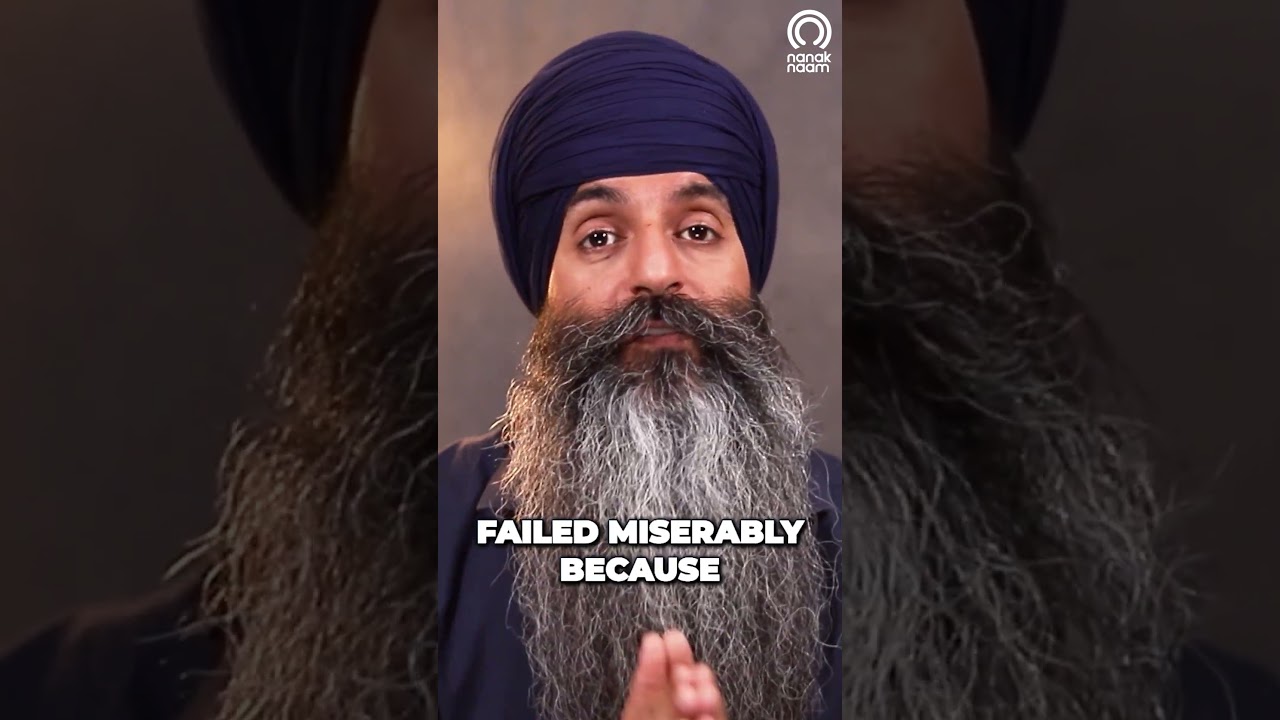
Transcript

[0:00] If you've ever been to an Indian

[0:02] funeral, you'll notice something strange

[0:04] that happens. When the body of the

[0:06] deceased is brought forward, a lot of

[0:09] the times people will start bowing their

[0:11] heads towards the loved one. And at

[0:13] times you might be looking at this and

[0:15] thinking, "Well, why? Why are they

[0:16] bowing down?" And what they do is not

[0:19] bow down to their loved one. What's

[0:21] happening at that moment is that people

[0:24] are being presented with death. They're

[0:26] being faced with the power of death. And

[0:29] when you see this great force of death

[0:32] right in front of you, there's no other

[0:34] thing that you can do but be humbled in

[0:36] front of it. Be humbled in the presence

[0:38] of death. Because ancient cultures have

[0:40] always recognized that there's a

[0:41] sacredness to death. What they realize

[0:43] is no matter who you thought you were,

[0:46] whether you are rich or poor, whether

[0:49] you're successful or famous all around

[0:51] the world, there is a master that powers

[0:53] us all. Death is like a master that has

[0:56] the strength to overpower all of us. And

[0:58] when you see that, you can only bow

[1:00] down. You can only bow your head in

[1:02] front of this supreme power in absolute

[1:04] humility and say, "This is how life

[1:07] works."

Nanak Naam
AuthorNanak Naam

Watch more from Nanak Naam on YouTube.

View profileWebsite
Explore Topics
Death-mortalityHumilityGriefSacred-powerGuru-nanak

Got Questions?

Frequently Asked Questions

People bow not to honor the deceased person specifically, but to acknowledge the overwhelming, undeniable power of death itself. The bow is an expression of humility in response to encountering a force that transcends individual loss and that no person can resist or escape.
Death functions as a master because it has supreme power over all humans regardless of their wealth, status, or achievements. Like a traditional master, death cannot be negotiated with or resisted—it overpowers everyone equally and indiscriminately.
Ancient cultures recognized that death is sacred—set apart and worthy of reverence—because it is so fundamental and powerful. Death is the boundary condition of human existence, revealing ultimate truth about how life actually works.
Bowing before death's supremacy is liberating, not depressing, because it clarifies what actually matters. When you accept that death will dissolve your wealth and status anyway, you stop clinging to those false measures of worth and instead discover deeper sources of meaning.
Death is the only universal human experience that makes no distinction based on merit, wealth, or fame. Everyone dies regardless of their achievements, making death the ultimate equalizer that strips away all the rankings and metrics by which people usually measure themselves.
Recognizing death as supreme master teaches that life is not about accumulating and defending possessions and status, but about moving through finite time with awareness of its preciousness. This realization shifts focus toward what is truly meaningful rather than what appears valuable in the world's ranking systems.

Continue Reading

More on Inspire

View All
Taking Life Too Seriously: Why External Fixes Fail
Inspire

Taking Life Too Seriously: Why External Fixes Fail

When you treat every problem as something to fix externally, you enter an unwinnable game. Gurmat teaches that inner mental state must come …

1 min read
Names for God: Why Limit Your Spiritual Language?
Inspire

Names for God: Why Limit Your Spiritual Language?

Explore why constraining divine names contradicts Guru Nanak's inclusive spirituality and how your personal relationship with God transcends…

1 min read
Suffering Comes from Wrong Expectations, Not Life Itself
Inspire

Suffering Comes from Wrong Expectations, Not Life Itself

Life is inherently easy; suffering arises when we impose unexamined expectations on reality. Learn to manage expectations and align with lif…

1 min read
Finding Purpose Beyond Achievement and Accumulation
Inspire

Finding Purpose Beyond Achievement and Accumulation

Discover why chasing external goals leaves you unfulfilled and how Sikh spirituality reveals your true purpose beyond identity, thought, and…

1 min read

Keep exploring

Continue your journey

More wisdom and gatherings from across the BrightStar directory.

More Articles

Browse the full library of teachings, interviews, and guides.

Back to all articles →

Teachers & Artists

Explore the lineages, musicians, and guides of the conscious world.

Explore artists →

Find an Event

Kirtan, retreats, sound baths, breathwork, festivals — happening soon.

Browse events →