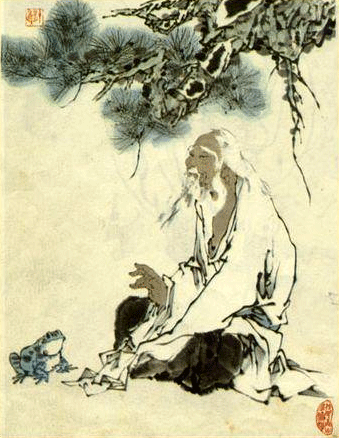
The Clarity of Simplicity in a Confusing World
Chuang Tzu's assertion, "To have much is to be confused," invites us to reflect on the paradox of abundance and the clarity that simplicity can bring. In a world where we often equate wealth and possessions with success and happiness, this statement challenges us to reconsider our values and priorities. It suggests that the more we accumulate, the more we may find ourselves entangled in confusion, overwhelmed by choices and distractions. This contemplation is not merely philosophical; it has profound implications for how we live our lives and what we deem essential.
As we delve deeper into this quote, we uncover a profound truth about the nature of desire and fulfillment. Chuang Tzu, a pivotal figure in Taoism, emphasizes that true contentment arises not from the accumulation of material wealth but from a harmonious relationship with the world around us. In this light, the quote serves as a gentle reminder that simplicity can lead to clarity, allowing us to navigate life with greater ease and understanding. The essence of this teaching resonates with our contemporary struggles, where the pursuit of more often leads to a sense of disconnection and chaos.
The image / the metaphor
At its core, Chuang Tzu's quote evokes a vivid image of a person burdened by their possessions, weighed down by the very things they sought to enhance their lives. The choice of the word "confused" suggests a state of mental disarray, where clarity is obscured by the clutter of excess. This imagery resonates deeply, as it reflects the common experience of feeling overwhelmed by choices, responsibilities, and the relentless pursuit of more. The verbs chosen—"to have" and "to be"—imply a direct relationship between our possessions and our state of mind, highlighting how external circumstances can shape our internal experience.
Diving deeper into the metaphor, we can see that the confusion stemming from abundance is not merely about physical possessions but extends to emotional and psychological realms. The more we cling to desires and attachments, the more we risk losing sight of our true selves. This confusion can manifest in various forms—stress, anxiety, and a pervasive sense of dissatisfaction. Chuang Tzu invites us to consider that by letting go of our attachment to "having much," we may find a clearer path to understanding ourselves and the world around us.
In the speaker's tradition
Chuang Tzu's teachings are deeply rooted in the Taoist tradition, which emphasizes the importance of living in harmony with the Tao, or the natural way of the universe. This philosophy encourages a sense of balance and simplicity, aligning closely with concepts such as *wu wei* (non-action) and *sunyata* (emptiness). In Taoism, the idea of letting go of excessive desires and attachments is seen as a pathway to achieving inner peace and clarity. This resonates with the Buddhist notion of *fana*, or the annihilation of the self, which suggests that true liberation comes from relinquishing our grasp on worldly possessions and identities.
In the text of the *Zhuangzi*, Chuang Tzu often illustrates the futility of rigid thinking and the importance of embracing the fluidity of life. One notable story involves a fish that is caught in a net, symbolizing how attachment can lead to suffering. By recognizing the transient nature of existence and the limitations of our desires, we can cultivate a deeper understanding of ourselves and our place in the world. This perspective invites us to embrace simplicity as a means of navigating the complexities of life.
Living the teaching
Consider a modern scenario where this teaching resonates: a person overwhelmed by the demands of a high-powered job, striving for promotions and accolades, only to find themselves feeling increasingly disconnected and anxious. In their pursuit of success, they accumulate responsibilities, expectations, and stress, leading to a profound sense of confusion about their true desires and values. By reflecting on Chuang Tzu's wisdom, they might begin to question whether their pursuit of "much" is truly fulfilling or simply a source of confusion. This realization could prompt them to seek a simpler, more intentional life, focusing on what genuinely brings them joy and fulfillment.
In relationships, the teaching can also find profound application. Imagine a couple caught in the cycle of materialism, believing that more possessions will lead to greater happiness. As they accumulate things, they may find themselves drifting apart, confused about their shared values and connection. By embracing the essence of Chuang Tzu's quote, they might choose to simplify their lives, focusing on experiences and emotional intimacy rather than material wealth. This shift can lead to a deeper understanding of one another and a more meaningful relationship, free from the confusion that excess often brings.
A reflection
As we contemplate Chuang Tzu's assertion, we are invited to reflect on our own lives and the ways in which abundance may be clouding our clarity. What aspects of our lives are we holding onto that may be causing confusion rather than joy? In what ways can we embrace simplicity to cultivate a deeper understanding of ourselves and our relationships? These questions serve as a starting point for a contemplative journey, encouraging us to seek clarity amidst the noise of modern existence.



Join the BrightStar Community
Stay connected with daily inspiration, event announcements, and community wisdom